
What DRG Law received: the diagnostic, the written definition of your Desired Clients and matters, the Brand Book and Content Strategy Book, then the build. The How We Work page lays out the sequence week by week.
Case study · DRG Law Professional Corporation
How one firmrebuilt its marketing,in order
DRG Law Professional Corporation, Toronto. Corporate and real estate law.This page is the complete account of the engagement: what the firm started with,and what CaseLoad Select built, in the order it happened.
FirmDRG Law Professional Corporation
PracticeCorporate and real estate law
LocationToronto, Ontario
StartedMay 2026
PillarsAuthority · Capture · Screen
1 · The starting point
The firm was established. Its marketing was not.
DRG Law Professional Corporation is a Toronto firm practising corporate and real estate law, serving business owners across the city, including its Portuguese-speaking business community. In May 2026, the firm had clients, referrals, and a website that read like every firm.
Nothing about the firm was broken. The work the firm did for its clients simply had no public shape, and the clients it wanted more of had no way to recognize it. The work started with a definition. The website came fifth.
2 · The definition
Before anything was built, one document.
The engagement started where every CaseLoad Select engagement starts: the diagnostic, then a written definition of the clients and matters the firm wants more of. The diagnostic read the evidence: what the firm had, what it was missing, what the right clients actually find. The definition turned that evidence into a direction every later decision could answer to.
Every deliverable in the chapters that follow serves this document. The full account of the method behind it lives on the How We Work page. With the definition written, the first build decision was the voice.
ClientsBusiness owners across Toronto, including the city's Portuguese-speaking business community
MattersCorporate and real estate work: leases, incorporations, shareholder agreements
LanguagesEnglish and Portuguese, matched to the clients the firm serves
3 · The voice
Nothing gets published until the firm knows what it sounds like.Delivered
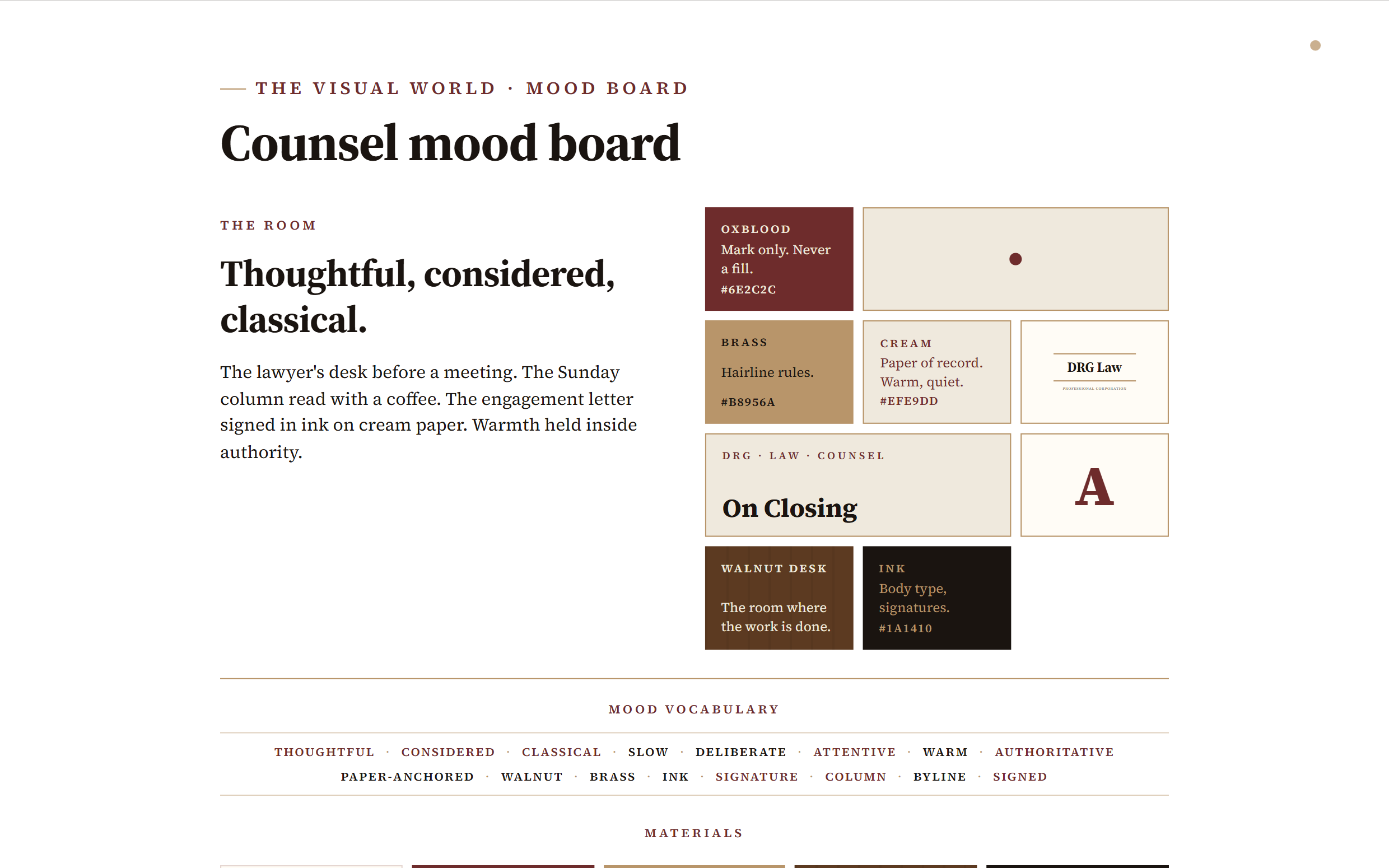
The Brand Book came first: the firm's positioning, voice, and visual identity, written down as rules. What the firm says, how it says it, what it never says. Every deliverable after this one answers to it, which is why the later chapters read as one firm and not as separate projects.
With the voice fixed, the question became what the firm says, week after week.
The Brand BookDelivered
4 · The plan
A calendar, tied to the matters the firm wants.Delivered
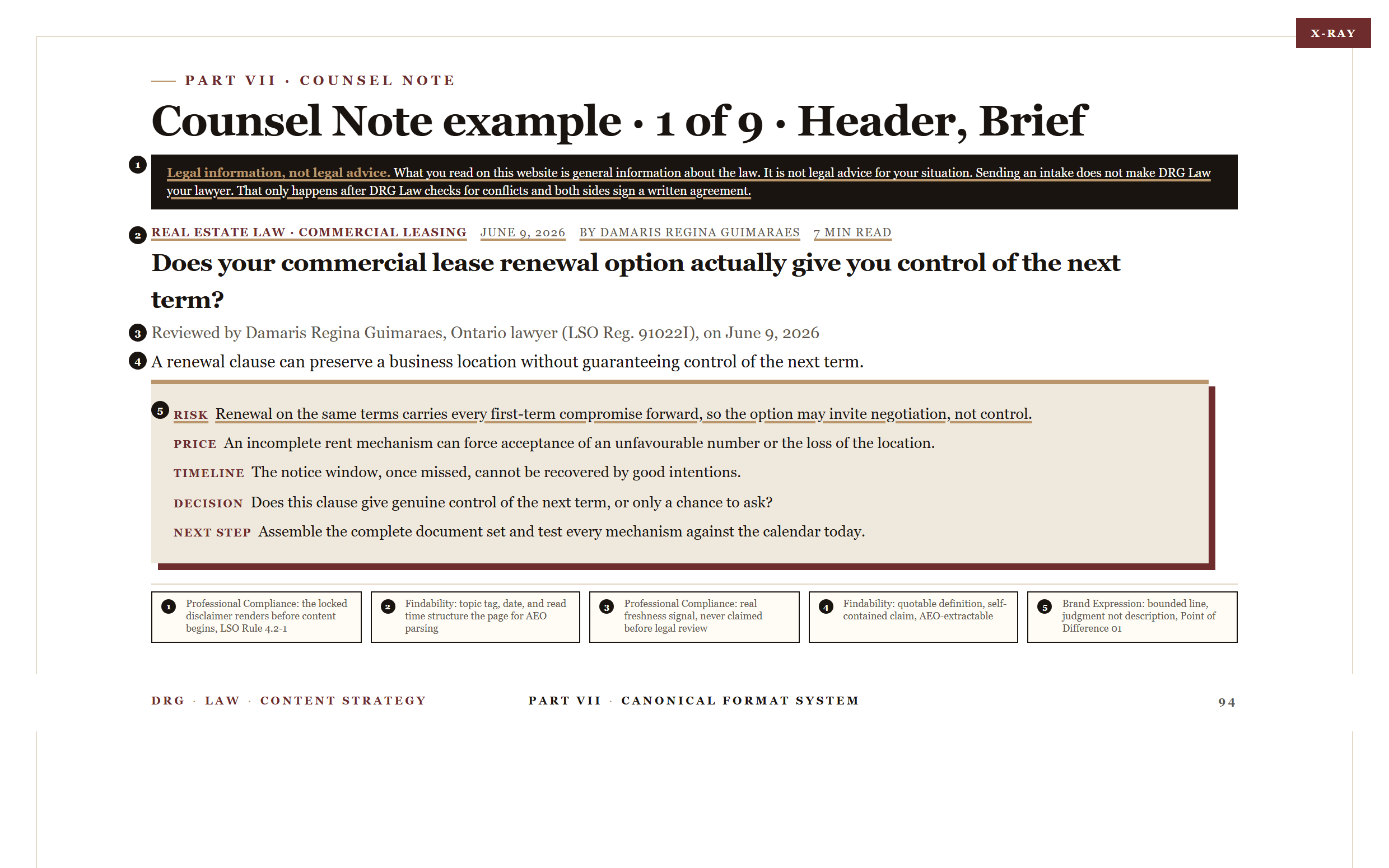
The Content Strategy Book decided what the firm publishes each week, where, and why: Counsel Notes, lead-magnet checklists, and map-listing posts, each one tied to a matter named in the definition. Publishing stops being occasional and becomes an operation.
It also fixes the anatomy. Every Counsel Note carries the same parts in the same order, and each part answers to a rule: the disclaimer that must render before the content, the structure that answer engines can parse, the line a reader can quote back. The book carries nine worked examples so the standard is shown.
Then the definition and the voice became the firm's public face.
The Content Strategy BookDelivered
5 · The face
The website the firm had, and the website it has.Delivered
The rebuild moved the firm to a new domain, drglaw.ca, and rewrote every page from the definition: positioned copy, the principal visible, an intake path on every page. Both captures are public pages, shown side by side to compare structure and positioning. Each frame scrolls: the full page, top to bottom.
DRG Law · drglegalservices.comMay 2026 · before

DRG Law · drglaw.caJune 2026 · after
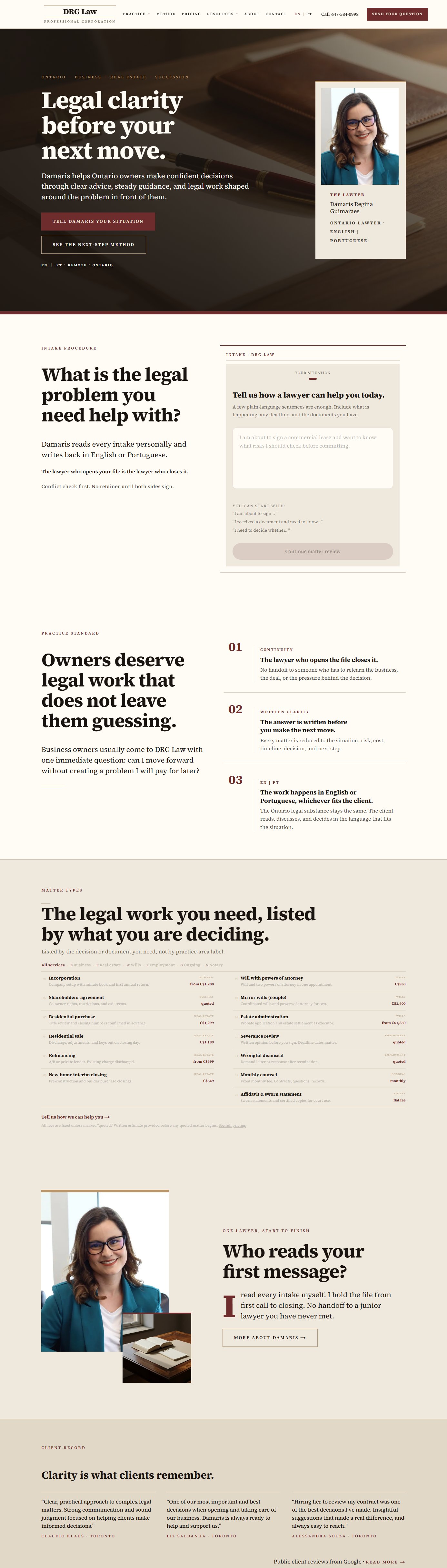
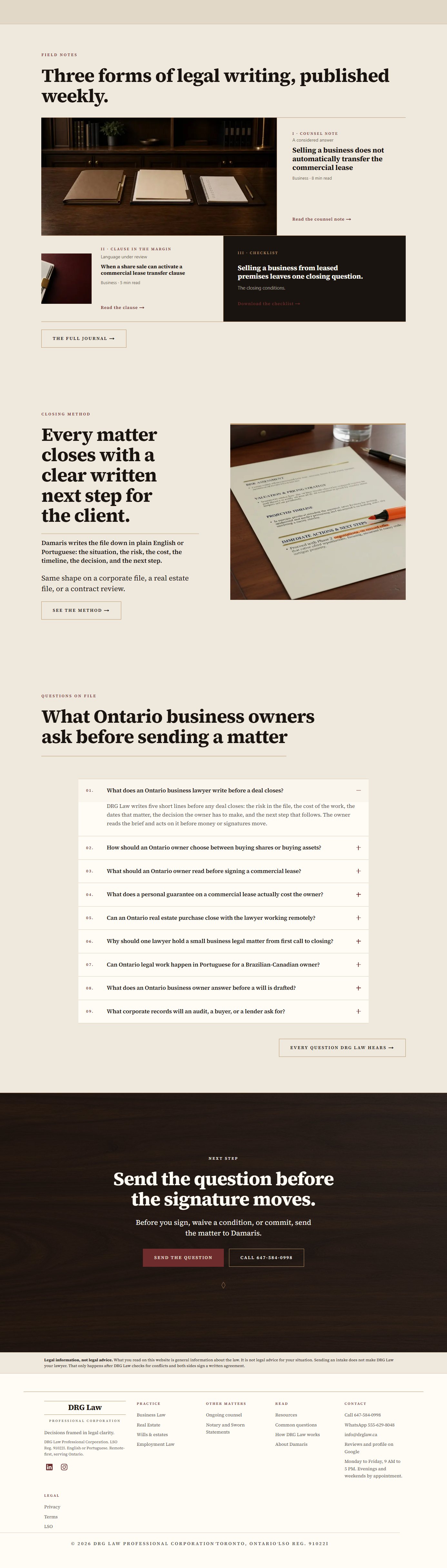
The difference underneath is the definition. The old site was written page by page. The new one was written from one document, which is why every page agrees with the others. A positioned website gives the right visitor somewhere to land. The next chapter gives them something to read.
6 · The conversation
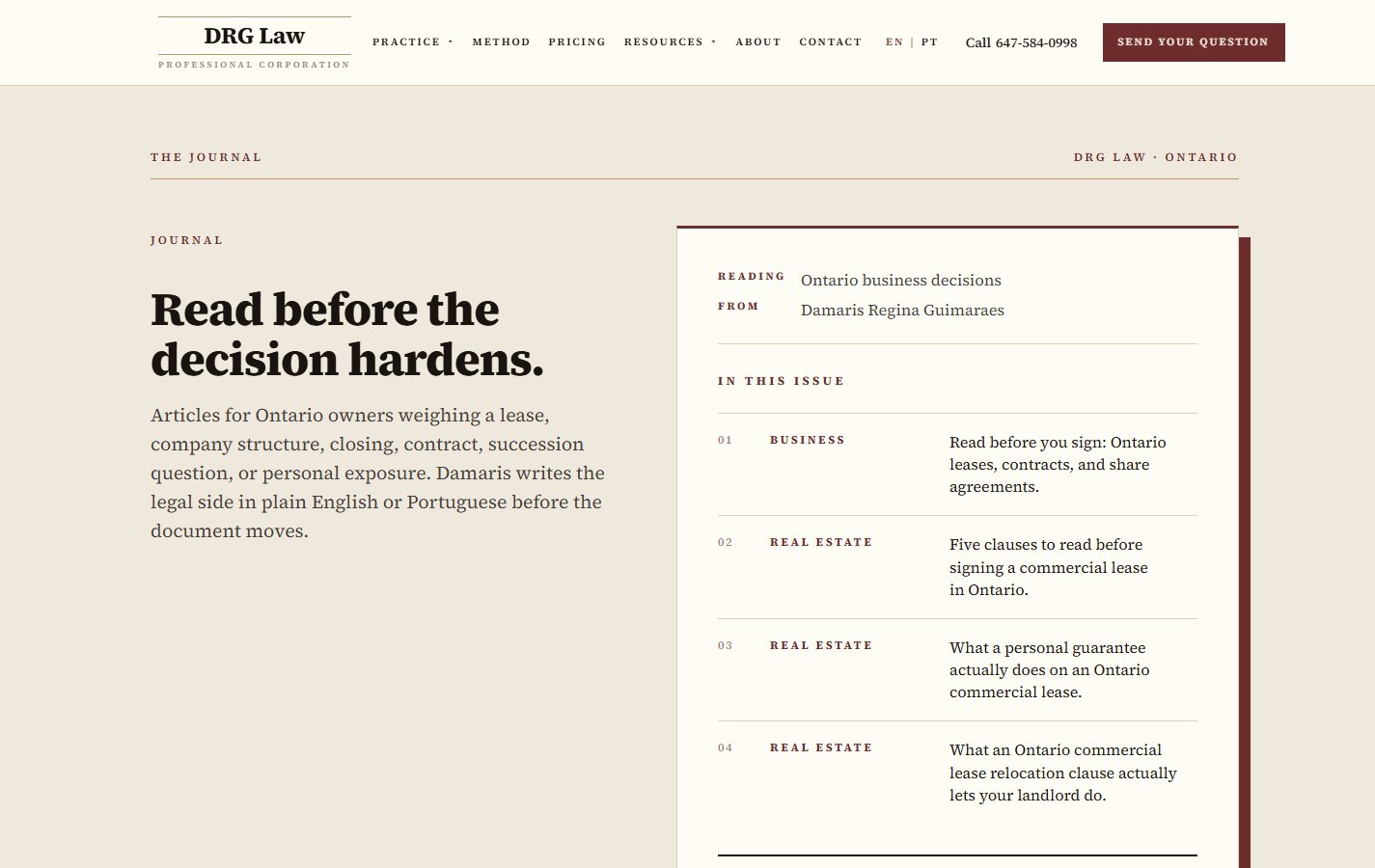
The firm, publishing in its own voice.Running weekly
Counsel Notes on the firm's journal and on LinkedIn, on the clauses its clients sign: relocation, renewal, shareholders agreements, founder vesting. In English and in Portuguese, matching the clients named in the definition, written in the voice written down in chapter 03.
Publishing creates inquiries. Inquiries need a door.
The journalRunning weekly
7 · The door
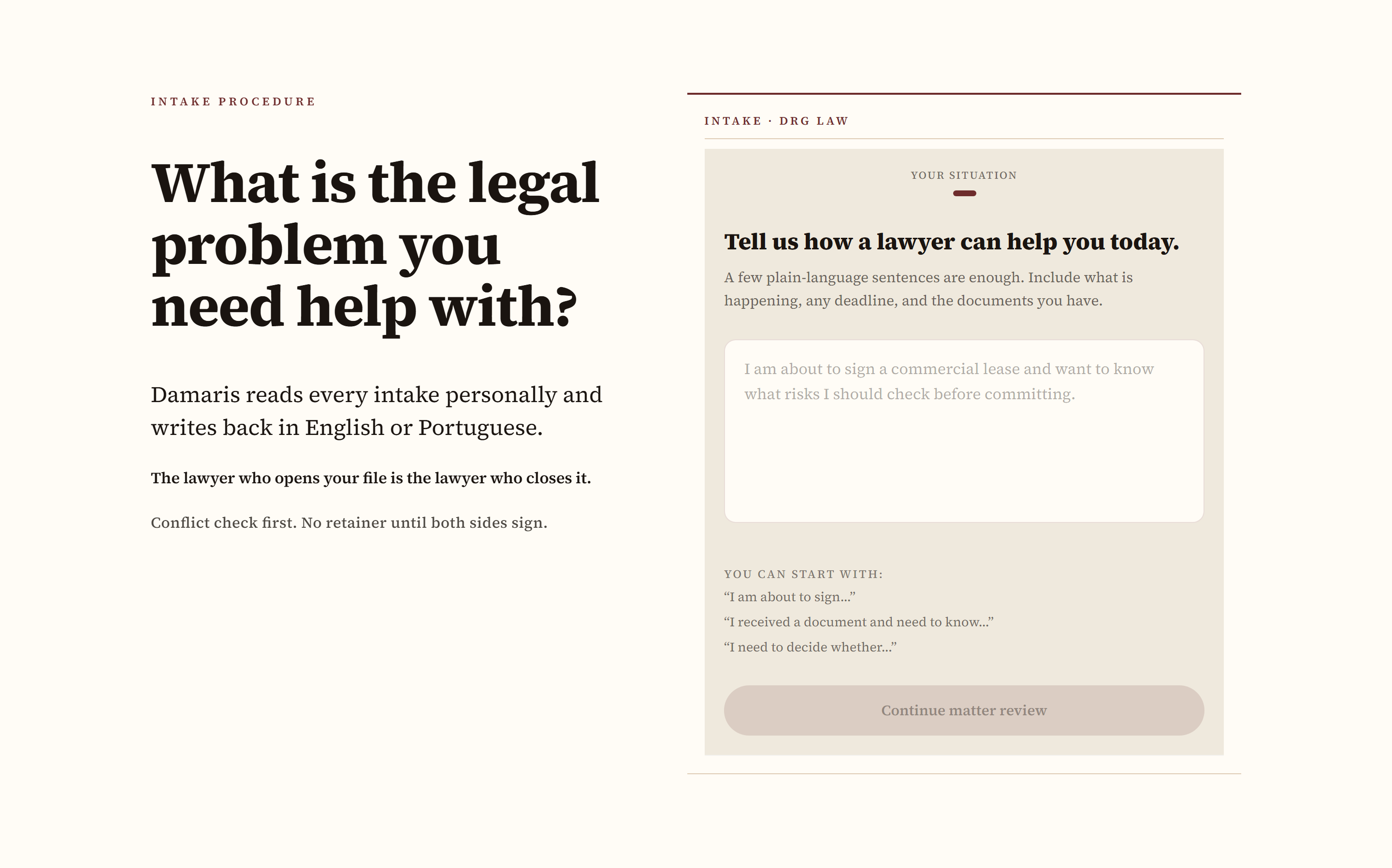
The intake path stays open when the office does not.Running continuously
The website widget and the firm's phone line now run through the Screen. Every inquiry arrives with its context captured and organized, ready for the lawyer's review. The Screen applies the priorities we configure. The lawyer decides what happens next.
The door captures the first contact. The follow-through looks after every contact that follows.
The intake pathRunning continuously
8 · The follow-through
No contact goes quiet.Running
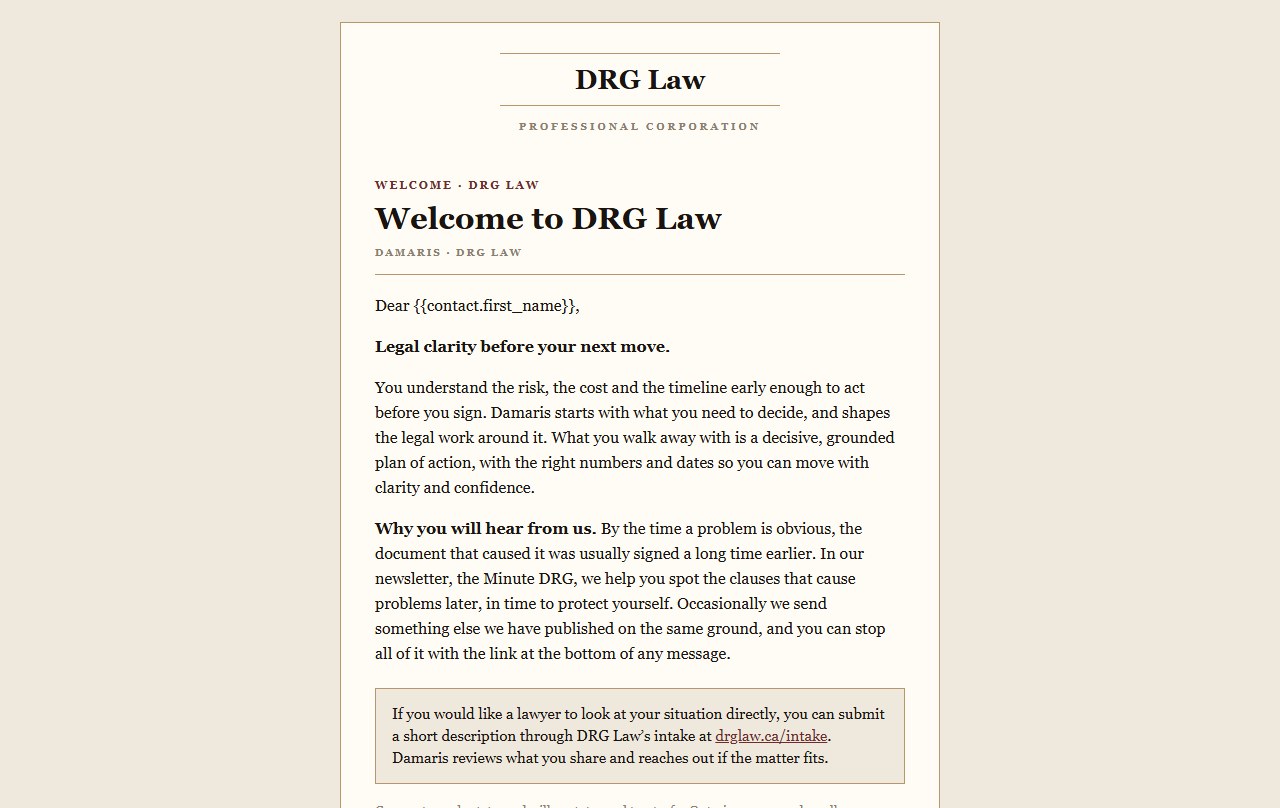
The welcome sequence every new contact receives and the review invitations past clients receive, in English and Portuguese editions, managed inside the same system as everything above it. The chain closes: definition, voice, plan, face, conversation, door, and now follow-through.
The emailsRunning
DeliveredThe foundation: Brand Book, Content Strategy Book, website
Running weeklyCounsel Notes on the journal and LinkedIn
Running continuouslyThe intake path: website widget and phone line
RunningWelcome and review email sequences
That is the operation today. Results take time, and this page does not borrow against them: when verified numbers exist, they will appear here with the firm, the timeframe, and the mechanism attached. Paid media waits. Target switches on when the foundation can support it, not before.
Client statement
The client's own words.
A client statement will appear here once the firm has supplied the wording and approved it in writing.
Questions about the work
Answers before you judge the work.
Only if you ask to. Case studies are built from work the client has reviewed and approved in writing. Several clients will prefer the work to speak only to them, and that preference is respected by default.
The model is built for small Ontario law firms, wherever in Ontario they practise. The first engagement happens to be in Toronto.
CaseLoad Select
Select better cases that
Select better cases that
build the practice you want
Start with a conversation about the clients, matters, and growth priorities that should shape your firm's next chapter.
Start a conversation